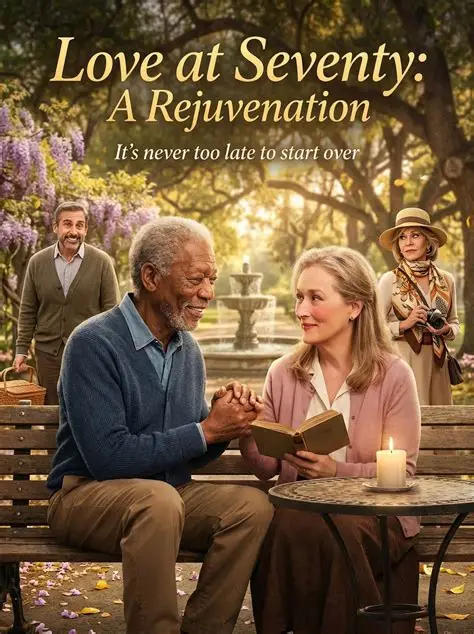
Cinema has long been fascinated with the fiery romances of youth—stories fueled by passion, urgency, and the belief that love must burn fast and bright. Love at Seventy: A Rejuvenation (2026) chooses a far quieter, more profound path. It tells a story about love discovered later in life, where every emotion is shaped by time, loss, and the wisdom earned through living.
The film opens with the subdued atmosphere of a class reunion held more than fifty years after graduation. There, Charlie and Helen—once close friends in their youth—unexpectedly meet again. Gone are the reckless glances and impulsive confessions of their younger days. In their place are cautious smiles, meaningful silences, and conversations carried by experience rather than desire. Both have lost their lifelong partners, a grief that no longer cuts sharply, yet lingers like a scar that never truly fades.

What begins as a simple reunion slowly transforms into something deeper. Charlie and Helen share coffee, stroll through familiar streets, and laugh at the awkwardness of “first dates” in their seventies. The film refuses to romanticize aging; instead, it confronts it honestly. The characters face very real fears: the fear of loving again only to lose once more, the fear that their bodies may no longer keep pace with their emotions, and the fear that their hearts may simply be too tired to begin again.
What makes Love at Seventy truly special is its ability to turn small moments into powerful emotional experiences. A slow, tentative handhold. A silent glance filled with unspoken understanding. Two people sitting side by side, comfortable in silence. Each gesture carries the weight of time. Charlie represents those who believe life still has something beautiful waiting ahead, while Helen embodies a heart that has loved deeply, lost profoundly, and now hesitates to hope again.

Equally important are the friends surrounding them—supporting characters who bring warmth, humor, and quiet wisdom. Through gentle laughter and thoughtful conversations, they remind us that love is not reserved for the young, and loneliness should not be the price we pay for growing older. Their words linger, prompting a haunting question: Are we denying ourselves happiness simply because we fear the passage of time?
If brought to the screen, Love at Seventy: A Rejuvenation would stand as a true feel-good film—not loud or dramatic, but deeply moving in its sincerity. It is not merely a love story, but a reflection on how we continue living after loss, how we find the courage to open our hearts again, and how beauty can exist in beginnings that arrive later than expected.
More than anything, the film carries a timeless message: age may leave its marks on the body, but it has no authority over the heart. The greatest adventures of life do not always begin when we are young. Sometimes, they arrive when we are old enough to understand the value of every moment shared.
Though it exists only as a cinematic idea, Love at Seventy: A Rejuvenation feels like the kind of film that deserves to be made—a gentle, hopeful reminder that love is never too late, as long as we are brave enough to welcome it.