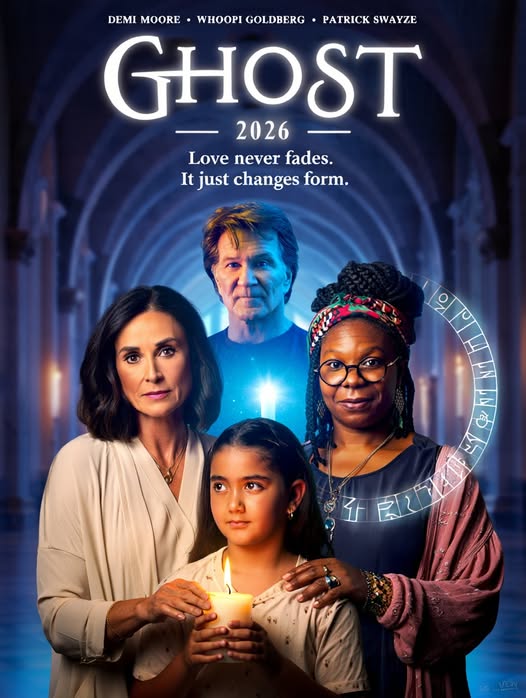
Some films do not age with time — they quietly become part of our collective memory. Ghost (1990) is one of those rare works, a film that taught generations to believe that love can outlast even death itself. From that lingering emotional legacy, the idea of Ghost (2026) emerges as a gentle question rather than a declaration: what if that love never ended, but simply continued — quietly shaping the years that followed?
In this imagined cinematic continuation, Molly Jensen returns at a very different stage of life. Demi Moore, whose performance once embodied grief and vulnerability, is envisioned as portraying a woman who has learned to live with memory rather than against it. Molly is now a mother, raising her child through the values her love with Sam once gave her — compassion, resilience, and faith in bonds that cannot always be seen.
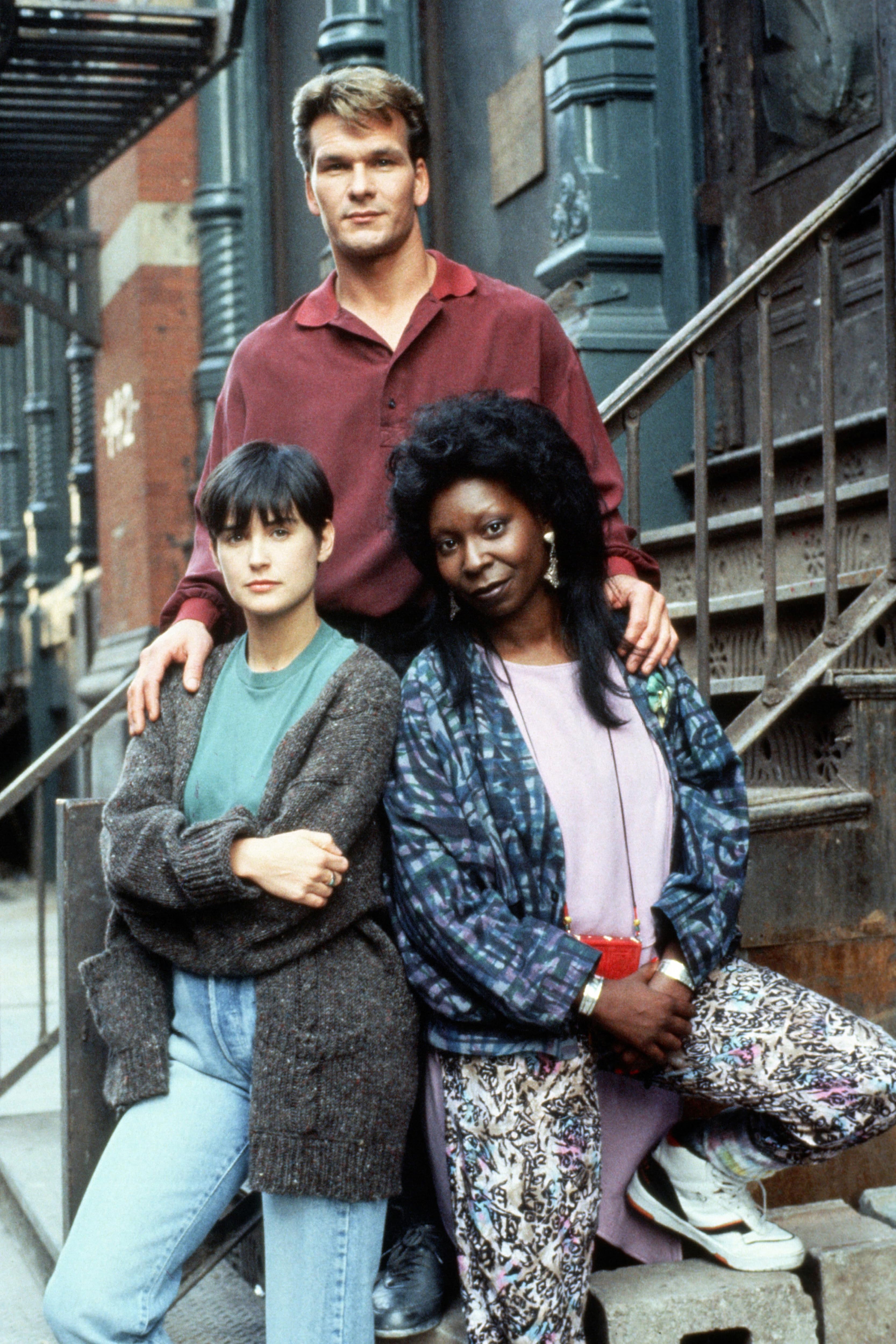
Ghost (2026) does not seek to resurrect the past. Instead, it explores something far more intimate: how love continues to define who we become long after loss has settled into silence. Sam does not return as a lingering spirit, but exists in gestures, in lessons passed down, and in the quiet ways Molly teaches her child to love without fear.
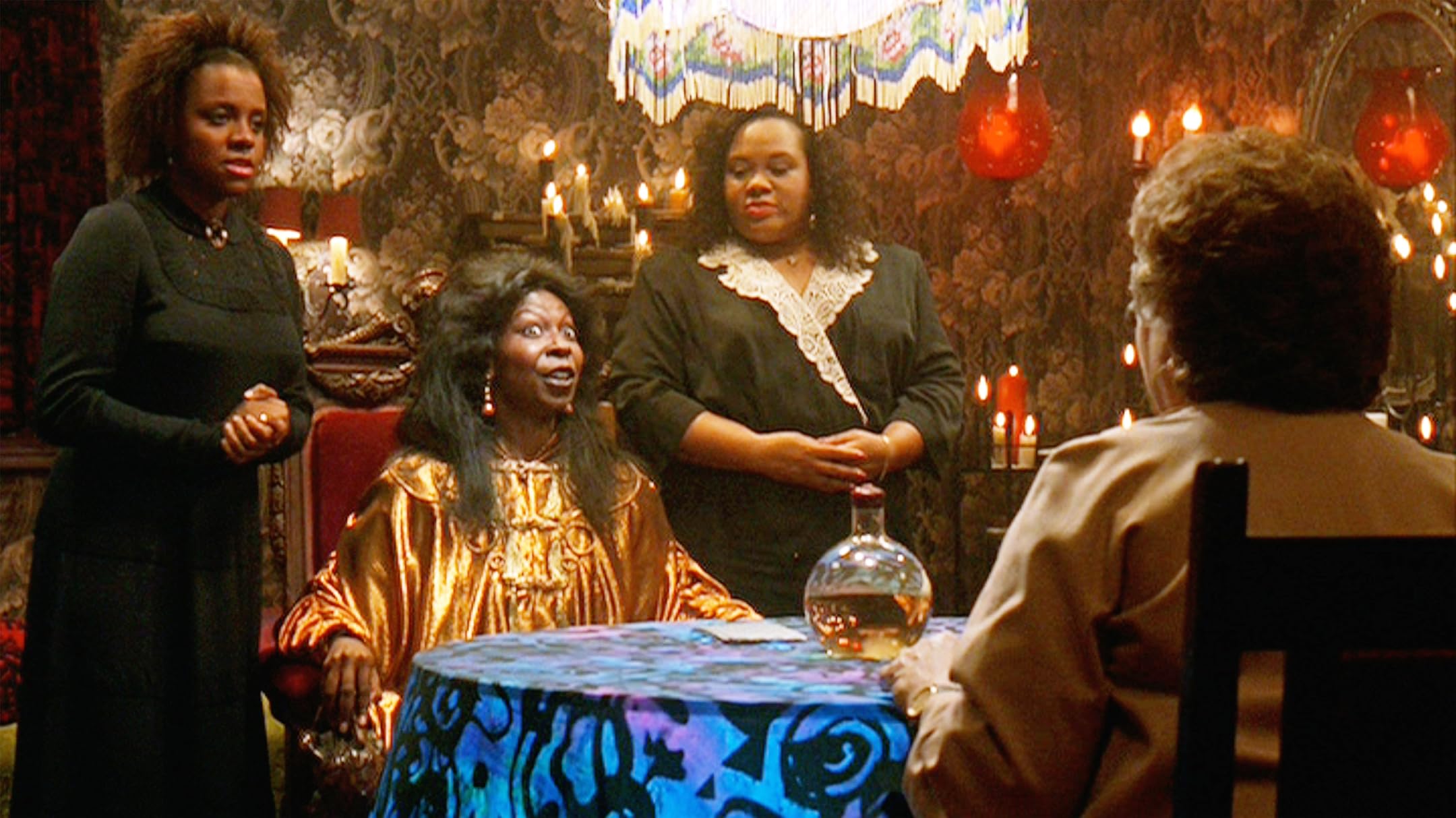
The presence of Oda Mae Brown, once again imagined through Whoopi Goldberg, serves as a human bridge between worlds. No longer merely a source of humor, Oda Mae becomes a keeper of belief — a reminder that some connections require neither proof nor explanation to be real.

If placed in the hands of director Jerry Zucker, Ghost (2026) would likely unfold with restraint and emotional precision. The supernatural would recede into the background, becoming a soft veil for a deeply human story about legacy, remembrance, and the continuation of love across generations. This would not be a film designed to overwhelm with spectacle, but one that lingers — inviting silence long after the credits roll.
What makes Ghost (2026) compelling is not nostalgia, but relevance. It speaks to an audience that has grown older, carrying its own losses. Where Ghost (1990) declared that love is stronger than death, this imagined chapter whispers something quieter, yet just as profound: love does not need to return, because it never truly leaves.

Ghost (2026) is not an officially announced or existing film project.
As of now, there has been no confirmation from any film studio, director Jerry Zucker, or cast members Demi Moore and Whoopi Goldberg regarding a sequel or continuation of Ghost (1990).
The narrative presented above is a fictional cinematic concept, inspired by the themes, emotional tone, and cultural legacy of the original film. It does not represent a production currently in development.
Even as a concept, Ghost (2026) reminds us why Ghost has endured for more than three decades. When cinema dares to speak softly about love, memory, and loss, it transcends time — and sometimes, a film does not need to exist to remain alive in the hearts of its audience.